


The Transatlantic Imperative: America’s Power Begins and Endures in Europe: How Retreat from Europe would undermine U.S. deterrence, technology leadership, and democratic resilience worldwide
Skrunda, 1993: The Crisis No One Noticed
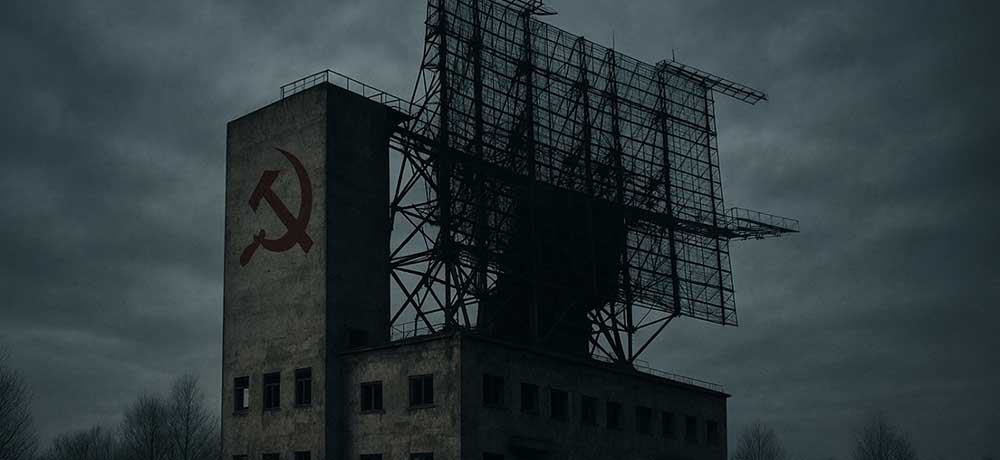
In the summer of 1993, scarcely two years after the Soviet Union’s collapse, a quiet confrontation unfolded on a remote patch of Latvian farmland. Just outside the small town of Skrunda stood one of the most important early-warning radar complexes in the former USSR, a massive Daryal installation capable of tracking missile launches across Europe. Though Latvia had regained its independence, Moscow insisted that Skrunda remained essential to Russian security and refused to vacate the site. Latvian authorities, newly sovereign and painfully aware of their vulnerability, appealed to the United States and Europe for support.
The crisis came to a head when Latvia announced its intention to dismantle the radar. Russian military officials warned of “grave consequences.” Trucks of Russian troops attempted to prolong their presence. Intelligence analysts feared that if Moscow succeeded at Skrunda, it would set a precedent for maintaining de facto enclaves across the Baltics, preserving forward positions that could be reactivated at will. The U.S. dispatched a small team of negotiators, backed, crucially, by unified transatlantic pressure, and in 1994 Latvia and Russia signed an agreement for dismantlement. When the radar’s tower was finally demolished in 1995, it became a symbol of the fragile but real line separating Europe’s newly liberated states from a resurgent Russian sphere of influence.
Yet the significance of Skrunda was widely overlooked. It was not a dramatic battle, there were no casualties, and it never made the front page of Western newspapers. But it crystallized a geopolitical truth: if the United States and Europe had not stood together, if Washington had treated the dispute as a “regional” matter, Russia would have preserved a permanent military footprint inside the Baltics. The precedent would have undermined NATO enlargement, weakened emergent democracies, and signaled to Moscow that coercion at Europe’s edge carried few costs.
Skrunda represents a broader pattern. When democracies hesitate, revisionist powers entrench. When the U.S. treats European security as peripheral, Europe becomes vulnerable. And when Europe becomes vulnerable, the international system begins to shift in ways that ultimately imperil the United States itself.
This dynamic is not theoretical. It is structural. And it has repeated across eras, from Manchuria in 1931 to Crimea in 2014, whenever the world’s stabilizing powers withdraw from contested spaces under the illusion that regional crises will remain contained. Skrunda is a reminder that they rarely do.
The Strategic Error of “Regionalizing” American Power
Calls for the United States to narrow its strategic attention away from Europe and towards the Western Hemisphere rest on an old, and repeatedly disproven, assumption: that America’s security can be insulated by geography. But as historians and strategists have long emphasized, threats incubated in Europe do not stay in Europe. Nor do authoritarian spheres of influence stop at their proclaimed borders.
As Hal Brands argues, the world’s balance of power is shaped not simply by regional dynamics but by how major powers perceive American will and staying power.[i] When Washington retreats, adversaries reinterpret the strategic environment: risks appear lower, coercive tools seem more viable, and revisionist ambitions grow accordingly. Eliot Cohen likewise warns that disengagement “creates strategic vacuums that other powers will inevitably fill,” reshaping global alignments in ways directly harmful to U.S. interests.[ii] Robert Kagan goes further, noting that the post-1945 order rests not on spontaneous peace but on deliberate American presence; remove that presence, and the system begins to revert toward historical patterns of competition and coercion.[iii]
Proponents of strategic retrenchment contend that Europe is wealthy enough to defend itself and that the United States should instead prioritize the Indo-Pacific. But this framing misunderstands the nature of transatlantic security, which is not merely a regional concern but a foundation of U.S. global power. As Francis Fukuyama has written, alliances are not burdens, they are mechanisms that transform American influence into a durable system of legitimacy and shared capacity.[iv]
European experts have long underscored just how vulnerable the continent remains to Russian coercion when U.S. leadership recedes. Former Supreme Allied Commander Europe, Philip Breedlove has repeatedly warned that Russia thrives in “gray zones” created by Western hesitation, exploiting political fractures and deterrence gaps.[v] Evelyn Farkas argues that U.S. withdrawal would embolden Moscow’s belief that its neighbors are negotiable strategic buffers, not sovereign states.[vi] Analysts Andrea Kendall-Taylor and Rachel Ellehuus similarly emphasize that Russia’s strategy hinges on underminingEuropean unity, and that only a strong U.S.–European partnership can deny Moscow the permissive environment it seeks.[vii]
From a military standpoint, the implications of an unchecked Russia are even more acute. Michael Kofman, one of the most respected analysts of the Russian armed forces, notes that Russia’s modernization, though costly and uneven, remains optimized for regional coercion and rapid offensive action against nearby states.[viii] Retired Lt. Gen. Ben Hodges warns that if Russia were able to impose military dominance over Eastern Europe or intimidate NATO’s eastern flank, U.S. strategic mobility and global basing access would degrade dramatically.[ix]
The notion that the U.S. can simply “pivot away” from Europe without consequence is therefore strategically incoherent. European security is not a self-contained problem; it is a central theater in the global contest over whether liberal or authoritarian rules will govern the 21st century. A weakened Europe fragments the world’s strongest democratic coalition, diminishes America’s industrial and technological alliances, and emboldens adversaries who see U.S. disengagement as proof of irreversible decline.
Retrenchment, in short, does not reduce America’s exposure to risk, it magnifies it. A regionalized America is a vulnerable America, and history shows that dangers that emerge in Europe, from the Baltic to theBalkans to the Black Sea, inevitably reverberate across the Atlantic. The question is not whether the U.S. can afford to stay engaged in Europe, but whether it can afford not to.
Why Europe Matters to American Prosperity
For all the rhetoric portraying Europe as a strategic distraction or an economic burden, the reality is the opposite: Europe is the single greatest force multiplier for American prosperity, geopolitical leverage, and military power. No other region in the world combines economic scale, technological sophistication, democratic alignment, and institutional depth in a way that so directly enhances U.S. national interests.
Economically, the transatlantic relationship remains the backbone of the global economy. The United States and Europe together account for nearly half of global GDP and form the world’s most deeply integrated investment corridor. American businesses derive more profit from European markets than from Asia and Latin America combined. This is not incidental, it reflects shared regulatory frameworks, predictable legal systems, and high-value technological ecosystems. As Max Boot has emphasized, alliances are not merely instruments of security but engines of national competitiveness, enabling the United States to project economic weight far more efficiently than it could unilaterally.[x]
Europe’s importance extends far beyond trade. The transatlantic industrial base is indispensable to U.S. defense production. In sectors ranging from aerospace to precision manufacturing to secure semiconductor supply, European firms and research institutions remain essential contributors to U.S. innovation and materiel readiness. The United States cannot sustain its qualitative military edge without the industrial and technological cooperation of advanced democracies, first among them Europe.[xi] In an era defined by high-end deterrence, the United States depends on partners who can co-produce, co-develop, and co-field sophisticated systems at scale.[xii] Europe is central to that enterprise.
Nor is Europe merely a factory floor or research hub. European defense integration has accelerated dramatically since 2014, producing new capabilities that directly reinforce U.S. security. Analysts such as Claudia Major and Christian Mölling document that Europe’s expanding defense spending, now targeting near 5% GDP, combined with deeper NATO–EU coordination, has strengthened logistics, air defense, cyber resilience, and military mobility in ways that materially support U.S. operations.[xiii] European militaries are increasingly interoperable with U.S. forces, contributing not only assets but strategic depth, ports, airfields, supply corridors, and forward infrastructure that no Indo-Pacific partner can replicate at comparable scale.[xiv]
Technology is another pillar of the transatlantic advantage. Ulrike Franke highlights Europe’s centrality to data protection and critical technology regulation, areas where shared standards allow the United States to shape global norms in ways authoritarian competitors cannot.[xv] Simona Soare notes thatU.S.-European cooperation in emerging technologies, from quantum to autonomous systems to secure supply chains, creates a democratic innovation bloc unmatched by China or Russia.[xvi]
These advantages also translate directly into geopolitical leverage. Sanctions on Russia following the 2022 invasion of Ukraine were impactful only because the United States and Europe acted together; absent European participation, U.S. financial power alone would have produced limited effect. Coordinated export controls on China’s advanced semiconductor sector similarly depend on European alignment.
Finally, European allies provide basing, intelligence, and force-projection platforms that underpin U.S. global posture. From Ramstein to Rota to the Baltic Air Policing mission, NATO infrastructure enables rapid U.S.response not just in Europe but in the Middle East, Africa, and even the Indo-Pacific. Without Europe, the United States becomes strategically slower, blinder, and more isolated.
Far from draining American resources, Europe amplifies them. It multiplies U.S. power abroad, strengthens U.S. prosperity at home, and reinforces the international system within which American influence thrives. To treat Europe as optional is to misunderstand the foundations of U.S. strength itself.
The Russian Threat: A Present and Growing Danger
Russia’s war in Ukraine is not a regional conflict, nor is it simply an episode of post-imperial turbulence. It is the manifestation of a broader strategic project: to dismantle the architecture of European security, weaken the cohesion of democracies, and restore a hierarchical order in which Moscow determines the sovereignty of states along its periphery. The United States cannot afford to misread the scale or ambition of this project.
Russian intentions are not ambiguous. As Anne Applebaum has written, the Kremlin views Ukraine not as a neighbor but as a prerequisite for rebuilding a sphere of influence whose logic extends across Central and EasternEurope.[xvii] Timothy Snyder similarly argues that Russia’s ideology of “restorative imperialism” positions the sovereignty of nations like Poland, the Baltic states, and even Finland as provisional.[xviii] Fiona Hill, drawing on decades of study, emphasizes that Putin sees European security institutions, especially NATO, as obstacles to be eroded, not fixtures to be tolerated.[xix]
Russia’s strategy blends conventional force with hybrid tools designed to undermine states from within. Mark Galeotti and Sergey Radchenko document how Russian political warfare, ranging from disinformation campaigns to cyberattacks to targeted corruption, seeks to fracture European democracies and erode U.S. credibility.[xx] These tactics are not opportunistic; they are systematic, extending well beyondUkraine into the Balkans, the Caucasus, and even Western Europe.
Energy coercion remains another pillar of Russian leverage. By exploiting Europe’s historical dependence on Russian gas, the Kremlin has sought to wield energy supply as a geopolitical weapon. Applebaum and Hill both note that Russia uses energy not merely as an economic tool but as a mechanism for political influence, compromising elites, shaping electoral outcomes, and constraining foreign-policy choices.[xxi]
Militarily, Russia’s threat is evolving rather than diminishing. While the war in Ukraine has inflicted severe attrition on Russian forces, it is dangerous to assume long-term collapse.[xxii] Russia is reconstituting its military, expanding industrial output, and integrating lessons from the war into new operational concepts optimized for coercion along NATO’s eastern flank. Russia’s doctrine continues to incorporate nuclear brinkmanship, including early escalation threats, as a means of deterring Western intervention.
This strategy has clear implications for the United States. If Russia succeeds in subordinating Ukraine or destabilizing NATO’s frontline states, Moscow will be positioned to coerce Europe more broadly. Such an outcome would fracture the transatlantic alliance, weaken America’s global military posture, and embolden China by demonstrating that U.S. security commitments are reversible. Ultimately, a Europe under Russian pressure becomes a launchpad for global authoritarian revisionism, one that threatens U.S.homeland security through cyberattacks, energy disruption, political interference, and strategic isolation.
Russian revisionism is not contained, and it is not static. It is expansionist, adaptive, and explicitly aimed at reversing the post-1945 settlement that has underpinned American prosperity and security for generations. Allowing Russia to reshape Europe would not produce stability; it would produce a world in which authoritarian power gains structural advantage at America’s expense.
The China–Europe Axis: A Strategic Blind Spot in U.S.Debates
If Russia seeks to redraw Europe’s borders by force, China seeks to reshape Europe’s geopolitical orientation through leverage, dependency, and influence. Yet in U.S. strategic debates, Europe’s centrality to China’s global ambitions remains chronically underestimated. For Beijing,Europe is not a secondary theater, it is, in many respects, the decisive theater for splitting the West, weakening U.S.-led coalitions, and setting the conditions for a future move on Taiwan.
Taylor Fravel notes that China’s grand strategy relies on isolating adversaries before confronting them, and the transatlantic alliance is the single greatest obstacle to China’s long-term ambitions.[xxiii] Odd Arne Westad similarly argues that China understands the 21st century as a contest over “political alignment, not territory,” and that breaking Western unity is a prerequisite for reordering global power.[xxiv] Europe, with its economic scale, technological sophistication, and normative influence, is the gravitational center of that unity.
China’s tools in Europe are subtle but powerful. Through the Belt and Road Initiative, strategic port acquisitions, and preferential lending, Beijing has cultivated long-term dependencies across Southern andEastern Europe. Elizabeth Economy has documented how these relationships are designed not merely for commercial access but for political leverage, shaping how governments vote in international institutions and respond to security crises.[xxv] Jude Blanchette adds that China’s state-capitalist model enables it to fuse commercial and political incentives, creating influence channels that are difficult for democracies to detect or counter.[xxvi]
Europe also plays a critical role in China’s technological ascent. Michael Beckley emphasizes that America’s ability to constrain China’s access to cutting-edge technologies depends on alignment with advanced European economies, particularly Germany, the Netherlands, and the Nordic states, all of which supply components essential to semiconductor production, quantum research, and advanced manufacturing.[xxvii] Without European participation, export controls become porous, and China can acquire the dual-use technologies it needs to erode U.S. military advantages.
On the security side, the link between the Indo-Pacific and the transatlantic alliance is no longer theoretical. Oriana Skylar Mastroargues that China’s plans for Taiwan explicitly assume a fragmented West, betting that Beijing can deter or delay European support for U.S. operations in the Indo-Pacific.[xxviii] Zack Cooper further notes that China views NATO not as a distant relic but as a strategic competitor, because NATO’s cohesion complicates Chinese efforts to pressure smaller states and shape global norms.[xxix]
The China–Russia partnership amplifies these challenges. China has studied Russia’s hybrid operations in Europe, cyberattacks, disinformation, oligarchic influence, and adopted similar tactics. Max Bergmann warns that Chinese political influence operations in Europe increasingly mirror Russian methods, leveraging economic entry points to shape elite incentives.[xxx] Jeffrey Mankoff similarly emphasizes that China’s political warfare exploits the same vulnerabilities Russia uses: corruption, weak institutions, and fragmented coalitions.[xxxi]
Finally, Europe’s control over critical mineral refining and its role in semiconductor supply chains mean that any U.S. strategy for technological resilience necessarily runs through Brussels, Berlin, and The Hague. If China succeeds in peeling Europe away from the United States, or even rendering it neutral, it would tilt the global balance of power decisively inBeijing’s favor.
For the United States, then, Europe is not a distraction from China policy. It is the fulcrum of it.
The Democracy Dimension: Why Values Translate Into Hard Power
Strategic debates often treat values as secondary to interests, but in practice, democratic resilience is a core element of national power. Retreat from Europe would mean retreat from the world’s strongest cluster of liberal democracies, the very network that produces the innovation, legitimacy, and institutional capacity that authoritarian states cannot replicate.
Larry Diamond argues that alliances among democracies generate not only ideological alignment but tangible strategic advantages: deeper intelligence sharing, interoperable militaries, and more resilient economic ecosystems.[xxxii] Democracies cooperate more reliably, sanction more effectively, and innovate more quickly, capabilities that directly strengthen U.S. national security. When democratic cohesion erodes, so does America’s power projection.
Steven Levitsky and Daron Acemoglu have each shown that democratic erosion, even incremental, creates openings for authoritarian states to exert influence.[xxxiii][xxxiv] Corruption, weakened rule of law, and declining public trust provide the veryentry points Russia and China exploit through disinformation, elite capture, political financing, and cyber intrusions. A fractured democratic Europe would thus be not merely a political setback but a structural vulnerability that adversaries would weaponize.
Yascha Mounk emphasizes that the resilience of democracies rests on their ability to deliver economic opportunity and credible governance, both of which depend on stable partnerships and open markets.[xxxv] Europe and the United States reinforce each other’s democratic ecosystems through shared regulatory norms, collective economic strength, and institutional cooperation. If either side retreats, their mutual stability weakens.
Erica Frantz’s work on authoritarian consolidation further demonstrates why values matter for power: authoritarian regimes project external aggression when internal autocracy tightens.[xxxvi] As Russia and China centralize control, their foreign policy becomes more revisionist. Democracies, by contrast, are constrained by institutions that temper adventurism and encourage coalition-based strategies. This asymmetry, authoritarian aggression versus democratic restraint, means that democratic partnerships are essential to balancing authoritarian coercion.
Crucially, the United States cannot expect to defend democracy in Asia while ignoring its erosion in Europe. The normative credibility required to rally Indo-Pacific democracies depends on consistent American leadership in its oldest and most consequential democratic partnership. If Europe falters, economically, politically, or strategically, the entire democratic world becomes more vulnerable, and U.S. influence declines accordingly.
Strengthening democracy abroad is not an act of charity; it is an act of strategic self-preservation. The cluster of democracies spanning North America, Europe, and East Asia is the foundation of the international system that has protected American interests for nearly eighty years. To weaken that cluster, or to abandon parts of it, is to weaken the very source of American power.
Policy Recommendations: Sustaining Stability in an Age ofRevisionism
Preventing authoritarian revisionism, and preserving astable global system aligned with U.S. interests, requires more than rhetoricalcommitment. It demands a coherent strategy across three domains: security,economic statecraft, and democratic resilience. These recommendations aredesigned to translate analytical arguments into actionable policy, grounded inthe insights of scholars and practitioners across the transatlantic andIndo-Pacific communities.
1. Security & Deterrence Architecture
Deepen NATO readiness and modern forward posture.
The United States should work with European allies to ensure that NATO’s eastern flank is permanently and credibly defended. This includes expanded prepositioning of equipment, enhanced rotational presence, and a readiness model aligned with lessons from Russian operations in Ukraine. Russia’s military, even when damaged, retains substantial coercive capacity requiring forward, integrated deterrence.[xxxvii]
Expand U.S.–Japan–EU–NATO intelligence and industrial coordination.
Cross-regional coordination is essential for countering authoritarian convergence. Joint intelligence frameworks, defense industrial partnerships, and shared procurement for munitions and advanced capabilities would bind together the transatlantic and Indo-Pacific alliances. Only a fused coalition can deny adversaries the ability to exploit geographic seams.[xxxviii]
Strengthen Eastern European air and missile defense & logistics corridors.
Enhancing mobility corridors, air defense networks, and resilient supply lines across Poland, the Baltics, and Romania will determine whether NATO can respond quickly to crises. Logistics, not just firepower, will define the futureEuropean battlespace.[xxxix]
2. Economic & Technological Statecraft
Create a Transatlantic Technology & Industrial Compact.
The United States and Europe must formalize cooperation in areas such as semiconductors, AI, quantum research, and critical minerals. Technological dependency on authoritarian states is a structural vulnerability that democracies must close rapidly.[xl]
Build joint counter-coercion mechanisms against Russia and China.
Europe and the U.S. should develop collective tools, automatic sanctions frameworks, shared investment screening, and coordinated supply-chain resilience, capable of deterring or offsetting economic coercion. Beijing increasingly uses economic leverage against European states in ways that parallel Russian energy coercion.[xli]
Harmonize export controls, investment screening, and semiconductor strategy.
The effectiveness of U.S. export controls on China’s advanced technology sector depends on Europe’s participation. Without allied alignment, China can circumvent restrictions by acquiring components and intellectual property fromEuropean firms.[xlii]
3. Democratic Resilience
Expand anti-corruption initiatives, information defense, and civil society support.
Democratic erosion serves as a point of entry for authoritarian influence. Compromised governance accelerates elite capture and disinformation penetration.[xliii]
Strengthen resilience in frontline states vulnerable to Russian or Chinese influence.
Countries like the Baltics, the Balkans, and parts of Central Europe face tailored influence campaigns exploiting institutional fragility. Democratic backsliding creates vulnerabilities long before formal authoritarianism emerges.[xliv]
Reinforce EU–NATO cooperation on rule-of-law and governance protections.
The line between security and governance is increasingly blurred. Democratic legitimacy enhances strategic cohesion, while internal fragmentation undermines deterrence.[xlv] The U.S. should therefore encourage joint EU–NATO initiatives that align governance reform with collective defense strategies.
Conclusion: The Unbreakable Bond
The idea of returning to “spheres of influence” is a geopolitical mirage, an illusion that obscures the fundamental reality of the 21st century: the United States and Europe form the strategic, economic, and democratic core of the international order. Weakening that bond will not bring stability; it will create the permissive conditions under which aggressive authoritarian powers reshape the world to America’s disadvantage. The calls to retreat into hemispheric isolation ignore a century of evidence demonstrating that crises inEurope do not remain in Europe, and that when the transatlantic partnership fractures, the entire international system begins to erode.
The lesson of Skrunda in 1993 remains instructive. A small, forgotten radar site in Latvia became a test case for whether newly free democracies would be allowed to stand on their own, or whether Russia would retain privileged military footholds across Europe. What prevented a dangerous precedent was not geography or luck. It was transatlantic solidarity. When the United States and Europe acted together, coercion failed. When they remained united, the international system remained stable. Skrunda was not an anomaly; it was the first signal of a broader truth: authoritarian powers probe for weakness, and they retreat only when confronted with unity and resolve.
That story is not a historical curiosity, it is a structural truth. Every major geopolitical challenge of the past century has reaffirmedthe same principle: when democracies are divided, authoritarian states advance; when democracies stand together, authoritarian strategies falter. The First WorldWar, the Second World War, the Cold War, and the post-9/11 era all reveal the same pattern. Division among free societies invites predation; unity among free societies deters it.
This is not a call for idealism but for strategic clarity.The transatlantic alliance:
- anchors the world’s strongest cluster of democracies, providing the institutional resilience that authoritarian regimes lack;
- drives the innovation engines that sustain military and economic power, from advanced manufacturing to semiconductors to AI;
- deters revisionist states across two continents, limiting Russia’s ambitions in Europe and complicating China’s coercive calculus in the Indo-Pacific; and
- shapes the rules of the global system in ways that favor openness, stability, and American prosperity.
To abandon or downgrade European alliance would be to surrender the geopolitical architecture that has protected the United States for nearly eight decades. It would embolden Russia, empower China, and fracture the coalition that makes the U.S. a global leader rather than a regional power. And it would signal to allies and adversaries alike that American commitments are reversible, encouraging the very instability advocates of retrenchment claim they wish to avoid.
Yet fatalism is unwarranted. The United States retains unmatched capabilities, economic, military, technological, and diplomatic. It still commands the world’s deepest alliances, the most sophisticated research ecosystem, and the highest global trust among democratic nations. The challenge is not capacity, but choice. What matters now is the decision before it: to continue shaping a world aligned with its interests, or to step back and allow authoritarian powers to define the future.
History’s verdict is unambiguous. Great-power leadership is not an indulgence; it is the price of stability and the pathway to prosperity. And the transatlantic relationship is not a legacy of the past, it is the foundation of the future. Democracies thrive when they stand together; they falter when they drift apart. The United States cannot preserve its prosperity or its security by retreating from the very system that enables both.
Just as at Skrunda, the international system will turn on whether the United States and Europe stand together. Their bond remains the hinge of global order, its anchor, its stabilizer, its guarantor. It must remain unbreakable.
___________________________________
[i] Hal Brands, The Twilight Struggle (New Haven: Yale University Press, 2022). https://yalebooks.yale.edu/book/9780300268058/the-twilight-struggle/
[ii] Eliot Cohen, The Big Stick (New York: Basic Books, 2016) https://www.hachettebookgroup.com/titles/eliot-a-cohen/the-big-stick/9780465096572/?lens=basic-books
[iii] Robert Kagan, The Jungle Grows Back (New York: Knopf, 2018) https://www.brookings.edu/books/the-jungle-grows-back-america-and-our-imperiled-world/
[iv] Francis Fukuyama, Political Order and Political Decay (New York: Farrar, Straus and Giroux, 2014) https://fukuyama.people.stanford.edu/politicalorderandpoliticaldecay
[v] Philip Breedlove, “Keep Door Open to Russia: Breedlove,” Atlantic Council, 2016. https://www.atlanticcouncil.org/blogs/new-atlanticist/keep-door-open-to-russia-breedlove/
[vi] Evelyn Farkas, “The US Must Prepare for War Against Russia Over Ukraine,” Defense One,2022. https://www.defenseone.com/ideas/2022/01/us-must-prepare-war-against-russia-over-ukraine/360639/
[vii] Andrea Kendall-Taylor and Rachel Ellehuus, “Understanding Russia’s Calculus onOpportunistic Aggression in Europe,” Center for a New American Security, 2025. https://www.cnas.org/publications/reports/understanding-russias-calculus-on-opportunistic-aggression-in-europe
[viii] Michael Kofman, “Russian Military Strategy: Core Tenets and OperationalRealities,” CNA, 2021. https://www.cna.org/reports/2021/08/Russian-Military-Strategy-Core-Tenets-and-Operational-Concepts.pdf
[ix] BenHodges, Future War and the Defence of Europe (Oxford University Press, 2021). https://www.brookings.edu/books/future-war-and-the-defence-of-europe/
[x] Max Boot, The Road Not Taken (New York: Liveright, 2018) https://www.cfr.org/book/road-not-taken
[xi] Michèle Flournoy, “Sharpening the U.S. Military’s Edge,” CNAS, https://www.cnas.org/publications/commentary/sharpening-the-u-s-militarys-edge-critical-steps-for-the-next-administration
[xii] Michael O’Hanlon, The Art of War in an Age of Peace (New York: Scribner, 2021) https://yalebooks.yale.edu/book/9780300268119/the-art-of-war-in-an-age-of-peace/
[xiii] Claudia Major and Christian Mölling, “Germany’s strategic reckoning,” EuropeanPolicy Centre, 2025. https://www.epc.eu/publication/Germanys-strategic-reckoning-Finally-ready-to-assume-leadership-653240/
[xiv] Camille Grand, “Defending Europe with less America,” European Council on ForeignRelations, 2024. https://ecfr.eu/publication/defending-europe-with-less-america/
[xv] Ulrike Franke, “Geo-tech politics: Why technology shapes European power,” EuropeanCouncil on Foreign Relations, 2021. https://ecfr.eu/publication/geo-tech-politics-why-technology-shapes-european-power/
[xvi] Simona Soare, “Emerging Technologies and Transatlantic Security,” Center for Strategic and International Studies, 2022. https://www.routledge.com/Emerging-Technologies-and-International-Security-Machines-the-State-and-War/Steff-Burton-Soare/p/book/9780367636845
[xvii] Anne Applebaum, Twilight of Democracy (New York: Doubleday, 2020) https://www.anneapplebaum.com/book/twilight-of-democracy/
[xviii] Timothy Snyder, The Road to Unfreedom (New York: Tim Duggan Books, 2018) https://www.abebooks.com/9780525574460/Road-Unfreedom-Russia-Europe-America-0525574468/plp
[xix] FionaHill and Clifford Gaddy, Mr. Putin (Washington, DC: Brookings InstitutionPress, 2015) https://www.jstor.org/stable/10.7864/j.ctt7zsvpb
[xx] Mark Galeotti, Hybrid War or Gibridnaya Voina? European Council on Foreign Relations, https://www.amazon.com/Gibridnaya-Getting-non-linear-military-challenge/dp/1365549801
[xxi] Anne Applebaum, “Putin's Grand Strategy,” South Central Review, 201. https://www.jstor.org/stable/26499838
[xxii] Michael Kofman and Rob Lee, “Not Built for Purpose: The Russian Military’s Ill-Fated Force Design,” War on the Rocks, June 2022. https://warontherocks.com/2022/06/not-built-for-purpose-the-russian-militarys-ill-fated-force-design/
[xxiii] Taylor Fravel, Active Defense: China’s Military Strategy Since 1949 (PrincetonUniversity Press, 2019). https://press.princeton.edu/books/hardcover/9780691152134/active-defense
[xxiv] Odd Arne Westad, The Global Cold War: Third World Interventions and the Making of Our Times (Cambridge University Press, 2005). https://www.cambridge.org/core/books/global-cold-war/75870878657DC67E0BC70FA7D2388494
[xxv] ElizabethEconomy, The World According to China (Cambridge: Polity, 2022) https://www.cfr.org/book/world-according-china
[xxvi] Jude Blanchette, China’s New Red Guards (New York: Oxford University Press,2020); https://academic.oup.com/book/43876/chapter-abstract/371031966
[xxvii] Michael Beckley, Unrivaled https://www.cornellpress.cornell.edu/book/9781501724787/unrivaled/
[xxviii] Oriana Skylar Mastro, “The Taiwan Temptation,” Foreign Affairs https://www.foreignaffairs.com/articles/china/2021-06-03/china-taiwan-war-temptation
[xxix] Zack Cooper and Hal Brands, U.S.-Chinese Rivalry Is a Battle Over Values,Foreign Affairs Magazine, 2021. https://www.foreignaffairs.com/articles/united-states/2021-03-16/us-china-rivalry-battle-over-values
[xxx] Max Bergmann, “Europe on Its Own,” Foreign Affairs Magazine, 2022. https://www.foreignaffairs.com/europe/europe-its-own
[xxxi] Jeffrey Mankoff, Empires of Eurasia (Yale University Press, 2022). https://yalebooks.yale.edu/book/9780300248258/empires-of-eurasia/
[xxxii] Larry Diamond, “Why Democracies Survive,” Journal of Democracy, https://www.journalofdemocracy.org/articles/the-impact-of-the-economic-crisis-why-democracies-survive/
[xxxiii] Steven Levitsky and Daniel Ziblatt, How Democracies Die (New York: Crown, 2018) https://www.penguinrandomhouse.com/books/562246/how-democracies-die-by-steven-levitsky-and-daniel-ziblatt/
[xxxiv] Daron Acemoglu and James Robinson, Why Nations Fail (New York: Crown, 2012) https://ia801506.us.archive.org/27/items/WhyNationsFailTheOriginsODaronAcemoglu/Why-Nations-Fail_-The-Origins-o-Daron-Acemoglu.pdf
[xxxv] Yascha Mounk, The Great Experiment (Penguin Press, 2022). https://www.penguinrandomhouse.com/books/665275/the-great-experiment-by-yascha-mounk/
[xxxvi] Erica Frantz, Authoritarianism: What Everyone Needs to Know (Oxford UniversityPress, 2018). https://global.oup.com/academic/product/authoritarianism-9780190880200
[xxxvii] Michael Kofman and Rob Lee, “Not Built for Purpose: The Russian Military’sIll-Fated Force Design,” War on the Rocks, 2022. https://warontherocks.com/2022/06/not-built-for-purpose-the-russian-militarys-ill-fated-force-design/
[xxxviii] Zack Cooper and Hal Brands, U.S.-Chinese Rivalry Is a Battle Over Values,Foreign Affairs Magazine, 2021. https://www.foreignaffairs.com/articles/united-states/2021-03-16/us-china-rivalry-battle-over-values
[xxxix] Ben Hodges, Future War and the Defence of Europe (Oxford University Press,2021). https://www.brookings.edu/books/future-war-and-the-defence-of-europe/
[xl] Elizabeth Economy, The World According to China (Cambridge: Polity, 2022) https://www.cfr.org/book/world-according-china
[xli] Max Bergmann, “Europe on Its Own,” Foreign Affairs Magazine, 2022. https://www.foreignaffairs.com/europe/europe-its-own
[xlii] Michael Beckley, Unrivaled https://www.cornellpress.cornell.edu/book/9781501724787/unrivaled/
[xliii]Daron Acemoglu and James Robinson, Why Nations Fail (New York: Crown, 2012) https://ia801506.us.archive.org/27/items/WhyNationsFailTheOriginsODaronAcemoglu/Why-Nations-Fail_-The-Origins-o-Daron-Acemoglu.pdf
[xliv]Steven Levitsky and Daniel Ziblatt, How Democracies Die (New York: Crown, 2018) https://www.penguinrandomhouse.com/books/562246/how-democracies-die-by-steven-levitsky-and-daniel-ziblatt/
[xlv] Yascha Mounk, The Great Experiment (Penguin Press, 2022). https://www.penguinrandomhouse.com/books/665275/the-great-experiment-by-yascha-mounk/


