


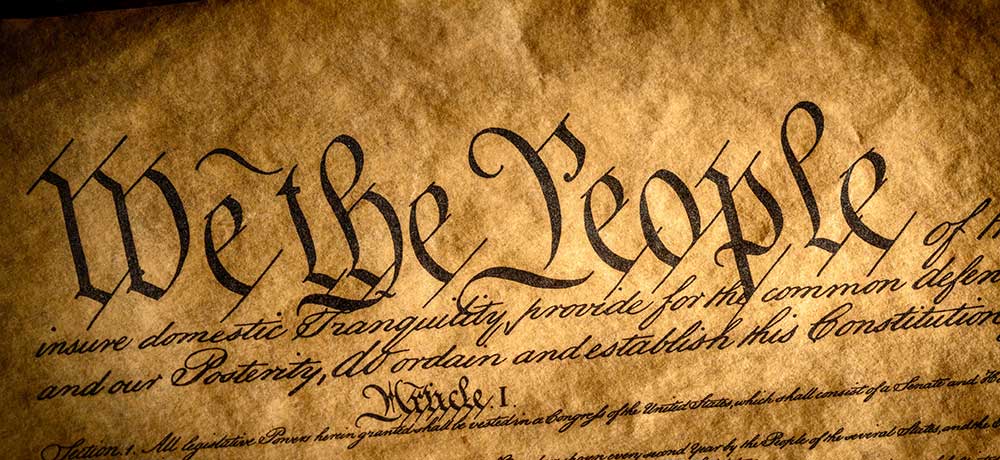
The Constitution is not optional—even in moments of crisis
Extraordinary Use of Force Demands Constitutional Scrutiny
The decision to carry out U.S. military action in Venezuela represents an extraordinary assertion of presidential power and demands serious scrutiny. The use of force is among the most consequential and constrained powers of the presidency. It must be exercised within the bounds of the Constitution and international law, with an understanding of the hard lessons of past U.S. interventions in the region. As with any armed conflict, civilians bear the greatest cost, and our thoughts are with those harmed and displaced.
The use of military force carries profound human and strategic consequences that extend far beyond the immediate moment. Decisions to employ it require deliberation, accountability, and restraint. The Constitution requires democratic deliberation and congressional authorization before the United States enters armed conflict. These processes are not mere formalities. They are essential safeguards for our service members, our democratic institutions, and innocent lives. History has repeatedly shown that bypassing these safeguards leads to strategic failure and human cost.
Lessons and Historical Precedents Cannot Be Ignored
Military intervention alone has rarely produced lasting solutions—particularly in Latin America, where past U.S. actions have too often deepened instability and civilian suffering rather than resolved underlying political and economic challenges. Actions such as these risk worsening regional instability, driving forced migration, straining border management, and undermining governance in neighboring countries.
The United States has seen this pattern before. From early twentieth-century occupations in Nicaragua and Cuba to Cold War-era efforts to overthrow elected governments in Guatemala and Chile, to more recent regime change interventions in Iraq and Afghanistan, successive U.S. administrations relied on military force in ways that undermine local rights and long-term stability. This history of coups, invasions, and sanctions continues to shape how communities around the world view the United States. Such actions undermine democratic self-determination and create conflict that harms vital U.S. foreign policy and national security interests—invoking doctrines historically used to justify U.S. dominance in the hemisphere risks reviving the very patterns that have damaged U.S. credibility for generations.
The Costs of Occupation and Assumed Governance
I write this not only as a Truman leader, but as someone who has spent time on the ground in countries where U.S. military action was followed by prolonged engagement or occupation. I recognize that the use of force and sustained presence can, at times, be necessary. But I have also seen firsthand the immense human, political, and strategic costs that follow when the United States assumes responsibility for another country’s security, governance, or future without clear legitimacy, careful planning, and a realistic understanding of what that commitment entails.
For that reason, any move by the United States to assume governing authority in another country, even temporarily, demands the highest level of scrutiny, authorization, and clarity about costs, risks, and exit conditions.
Serious Constitutional and International Legal Questions
The reported removal of a sovereign government and assumption of governing responsibility, even on an interim basis, raises some of the most serious questions in both constitutional and international law, including those that arise when one state exercises control over another’s territory without explicit authorization or consent.
These questions are not academic. They go directly to whether Congress has exercised its constitutional role, whether international legitimacy exists, and whether the United States is prepared to accept the long-term human and strategic costs of assuming responsibility for another nation’s future.
This responsibility is even harder to fathom given the hollowing out of the institutions required to manage post-conflict stabilization and governance. Assuming responsibility for another country’s future is not a purely military task. It depends on robust diplomatic, development, and humanitarian institutions’ capacities, which have been significantly weakened by the erosion of the State Department and the operational gutting of USAID.
A National Security Approach Rooted in Democratic Values
I approach this moment guided by the values that have shaped my work in national security and leadership within the Truman community. True security is built through diplomacy, respect for sovereignty, and support for democratic institutions, not through unilateral military action. Durable outcomes require multilateral coordination, humanitarian support for affected populations, and sustained diplomatic engagement with regional partners and democratic actors inside Venezuela.
As details continue to emerge, I am calling for immediate transparency, formal congressional engagement, and clear limits on the scope and objective of U.S. military involvement, adherence to international humanitarian law, and maximum protection for civilian lives as the situation continues to unfold.


