Watch the recording here
SESSION 1:
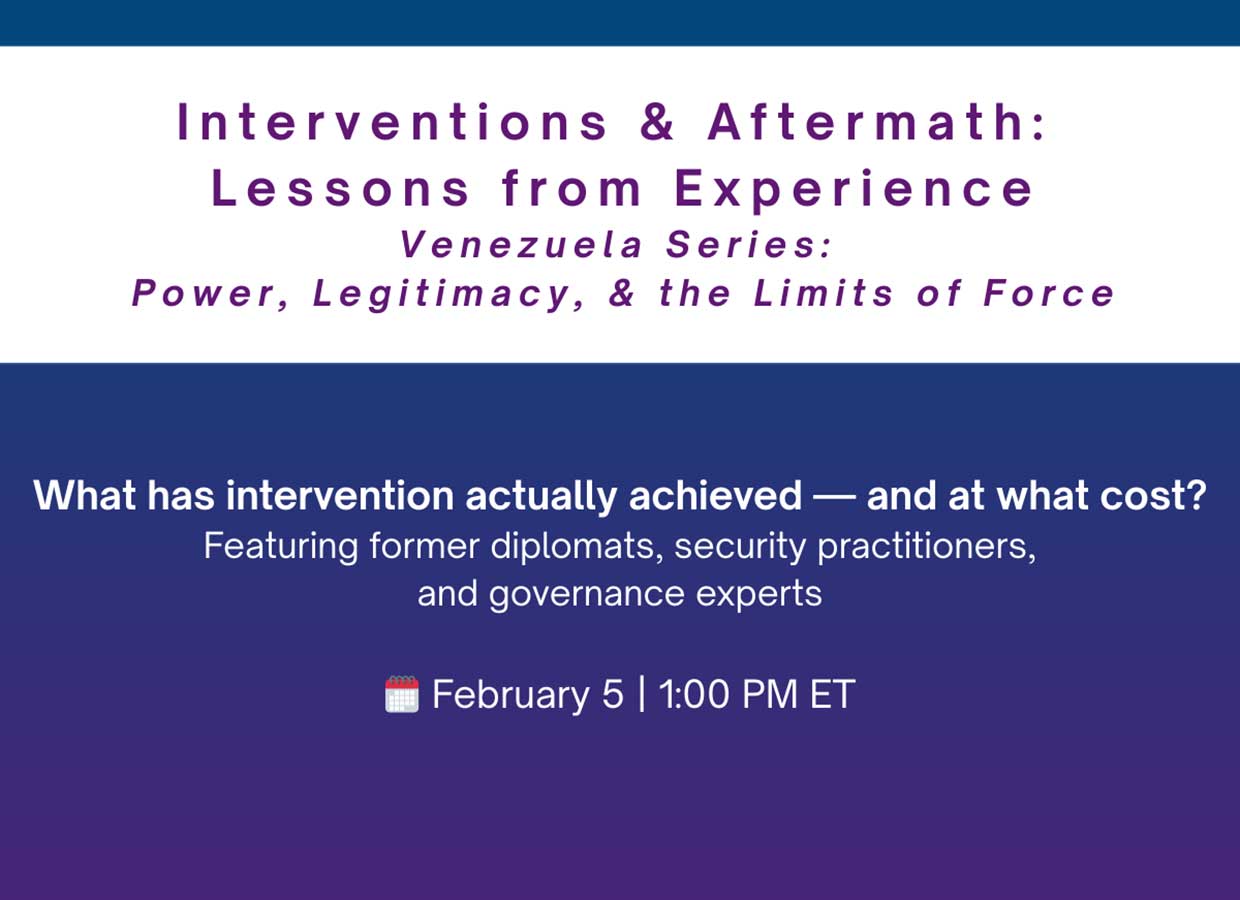
This session examines what decades of U.S. and international intervention efforts have achieved in practice, particularly in contexts where legitimacy is contested and governance institutions are weak.
Our aim is for this discussion to center on outcomes: when intervention has helped stabilize societies, when it has compounded instability, and why rebuilding legitimate governance often proves far more difficult than removing a regime.
This session is part of a three-part learning series entitled:
Venezuela: Power, Legitimacy, and the Limits of Force
This learning series is designed to ground conversations about Venezuela in regional reality, historical experience, and the rule of law. Rather than responding to events in isolation, the series aims to equip participants with the political, economic, legal, and strategic context needed to assess U.S. actions responsibly, particularly where military force, governance, and resource interests intersect. The discussion is intended to be substantive, experience-driven, but accessible, and where appropriate, broadly applicable to Venezuela and beyond.
Our overarching objective across the three sessions is to equip participants with:
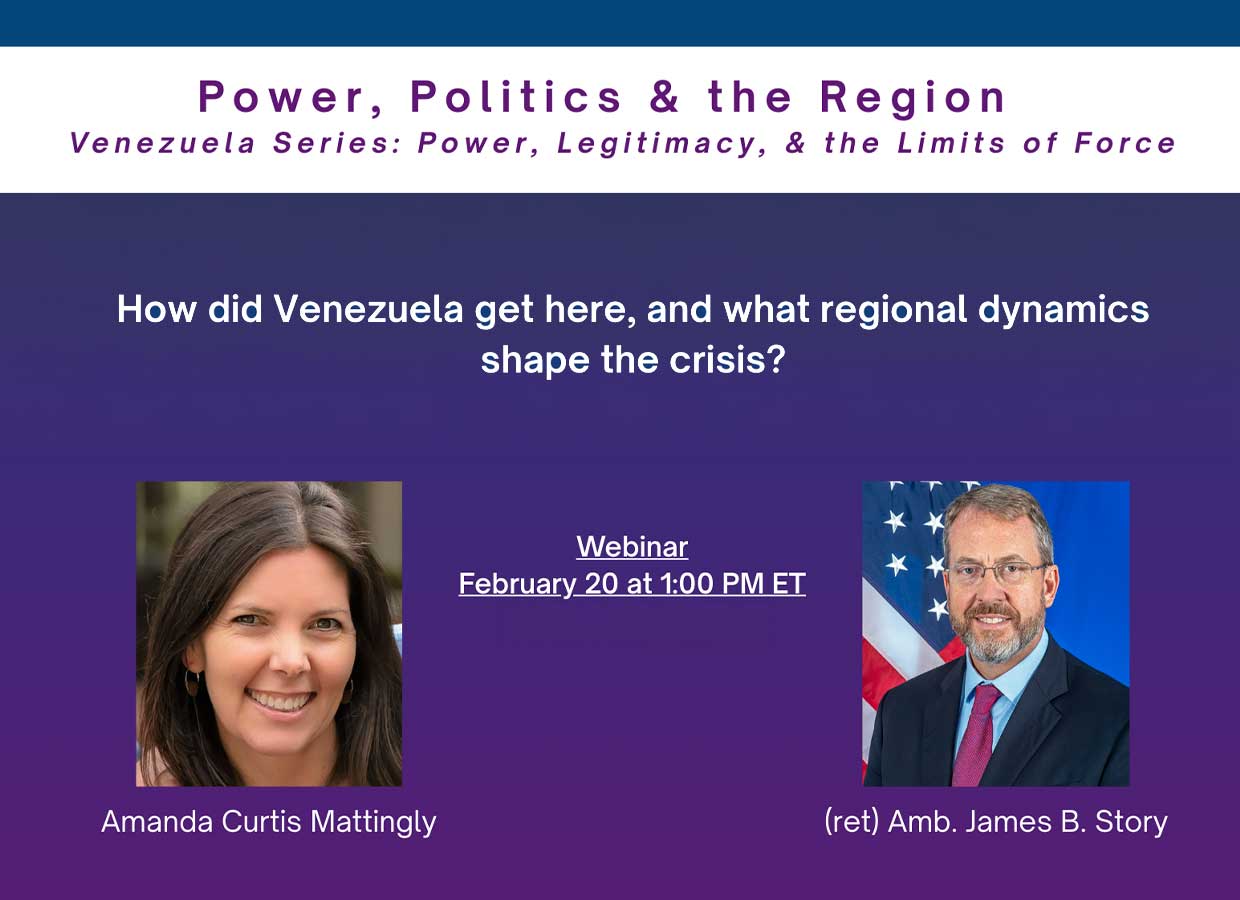
- An understanding of what led to Venezuela’s current crisis
- Key lessons from what history teaches about intervention and nation-building
- A deeper understanding of what U.S. constitutional and international law require in moments of crisis
This reflects Truman’s core belief that national security is strongest when power is exercised with legitimacy, restraint, and accountability.